Signs Your Parent May Need Assisted Living: A Guide for Naples Families
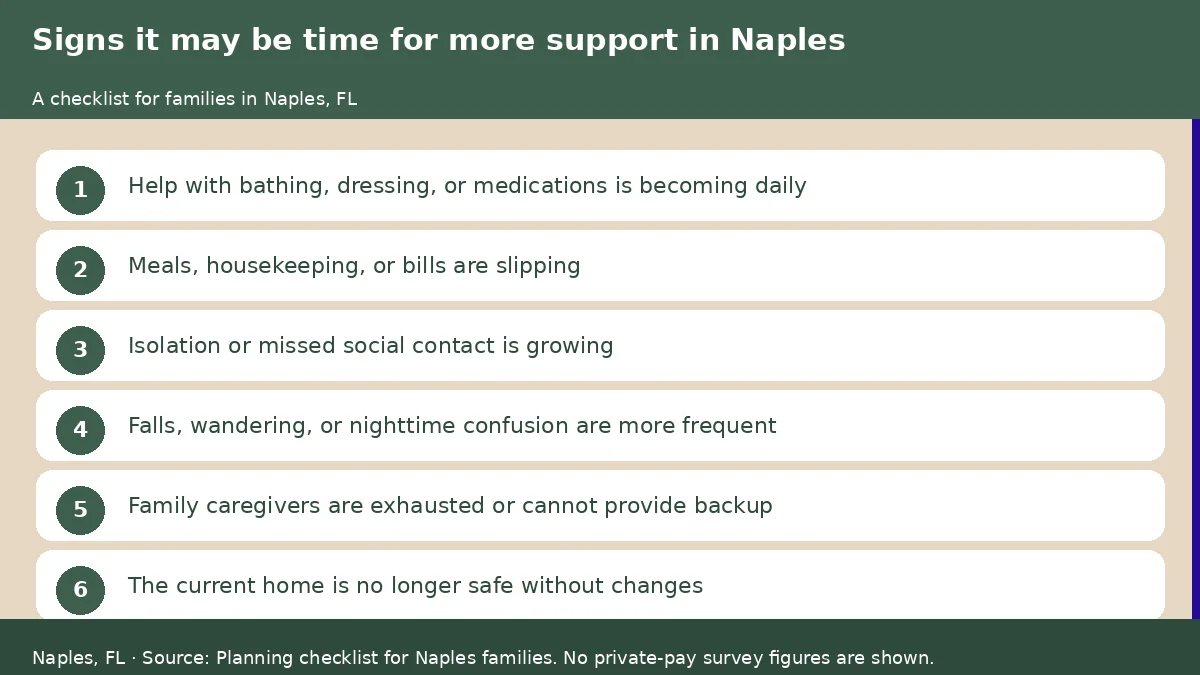
Many older adults move to Naples for its warmth, its beaches, and its easy pace. Years later, their adult children, often living far away in the Midwest or the Northeast, begin to notice that a parent who once managed everything is struggling. The signs are often small at first and easy to explain away. This guide describes what to watch for, how Southwest Florida's climate can make some risks greater, and how to take the next step.
When family lives far away
Long-distance families face a particular challenge: a parent can sound fine on a weekly phone call while things at home slowly slip. If you visit only once or twice a year, use each visit to look closely. Open the refrigerator, look at the mail, check the pill bottles, and watch how your parent moves around the house. Ask a trusted neighbor, friend, or member of your parent's church to let you know if they notice changes.
Physical signs
Falls
The Centers for Disease Control and Prevention reports that more than one in four adults 65 and older falls each year (CDC, facts about older adult falls). Look for unexplained bruises, holding onto furniture, a shuffling walk, or reluctance to go outside. Many older adults do not mention falls, so ask directly.
Eating and weight
Weight loss, an empty or spoiled refrigerator, or meals reduced to snacks can mean shopping and cooking have become too much.
Personal care
Unwashed hair, wearing the same clothes for days, or a change in someone who always took pride in their appearance are common early signs that bathing and dressing are harder.
Medications
Missed or doubled doses, expired bottles, and confusion about what each pill is for are serious warnings, because medication errors can lead to falls and hospital stays.
Heat and hydration
Southwest Florida's heat adds risk for older adults. Watch for:
- An air conditioner turned off or set very high to save money
- Signs of dehydration, such as dizziness, confusion, or very little to drink
- Walking or gardening outdoors in the midday heat
- Difficulty recognizing when they are too hot
Older adults can be less aware of thirst and heat stress, and some medications increase the risk.
Hurricane season worries
If your parent lives alone, ask how they would handle a hurricane. Could they put up shutters, gather supplies, and evacuate if told to? Do they have a way to get to a shelter, and someone to go with? Could they manage several days without power in the heat? If the honest answer is no, that is an important sign. Florida assisted living facilities must plan for power outages, including keeping indoor temperatures at or below 81 degrees for at least 96 hours (Fla. Admin. Code R. 59A-36.025). Our guide to hurricane questions for Naples assisted living has more.
Signs around the home
- Unopened mail, unpaid bills, or shutoff notices
- A home that has become cluttered or neglected
- Scorched pans or appliances left on
- An overgrown yard or a pool that has not been maintained
- New dents or scrapes on the car, or getting lost while driving
Social and emotional signs
- Giving up clubs, golf, church, or volunteering
- Spending most days alone indoors
- Seeming sad, anxious, or withdrawn
- Talking about being lonely or a burden
Many Naples retirees built their social life around activities they can no longer manage, or friends who have moved away or died. Loneliness can follow quietly, and it often goes unnoticed because a parent sounds cheerful on a short call.
Memory and thinking
- Repeating questions or stories
- Forgetting appointments or medications
- Getting lost in familiar places
- Trouble managing money, or falling for scams
A physician should evaluate memory changes, since some causes are treatable. If dementia is diagnosed, see our article on assisted living versus memory care in Naples.
Signs in the caregiver
If a spouse or nearby family member is providing care, watch for exhaustion, poor sleep, declining health, and a sense that they are barely holding things together. Caregiving is meaningful, but no one can do it alone indefinitely.
After a fall or hospital stay
Florida's AHCA lists a recent fall, health scare, or hospital stay among the times to consider assisted living (AHCA, Assisted Living in Florida guide, PDF). Before discharge, talk with the hospital's case manager about the level of care needed. A short rehabilitation stay may come first. Ask, too, whether home was working well before the hospital visit.
Keep a record
For a few weeks, write down what you or others notice, with dates: meals, medications, falls, the state of the house, your parent's mood. Share it with siblings. Specific observations help in conversations with your parent and their doctor.
When other help may be enough
Not every concern means a move. A few hours a week of in-home help, meal delivery, a medication organizer, grab bars, a medical alert device, or adult day services can extend independence for some people. Florida's AHCA guide also describes adult family care homes, licensed private homes where up to five adults live together in a family-like setting, as one alternative. Our comparison of assisted living and in-home care costs in Naples can help you think through when each option makes sense. Assisted living tends to fit best when help is needed throughout the day, nights are not safe, or isolation is taking a toll on your parent's health and spirits.
Starting the conversation
- Choose a calm time, not during a crisis.
- Describe what you have noticed, not what you have decided.
- Ask about their fears and wishes, and listen.
- Talk about what they would gain: company, meals, safety, help in storms.
- Suggest a visit, not a commitment.
- Involve a doctor, pastor, or friend they trust.
Local help in Collier County
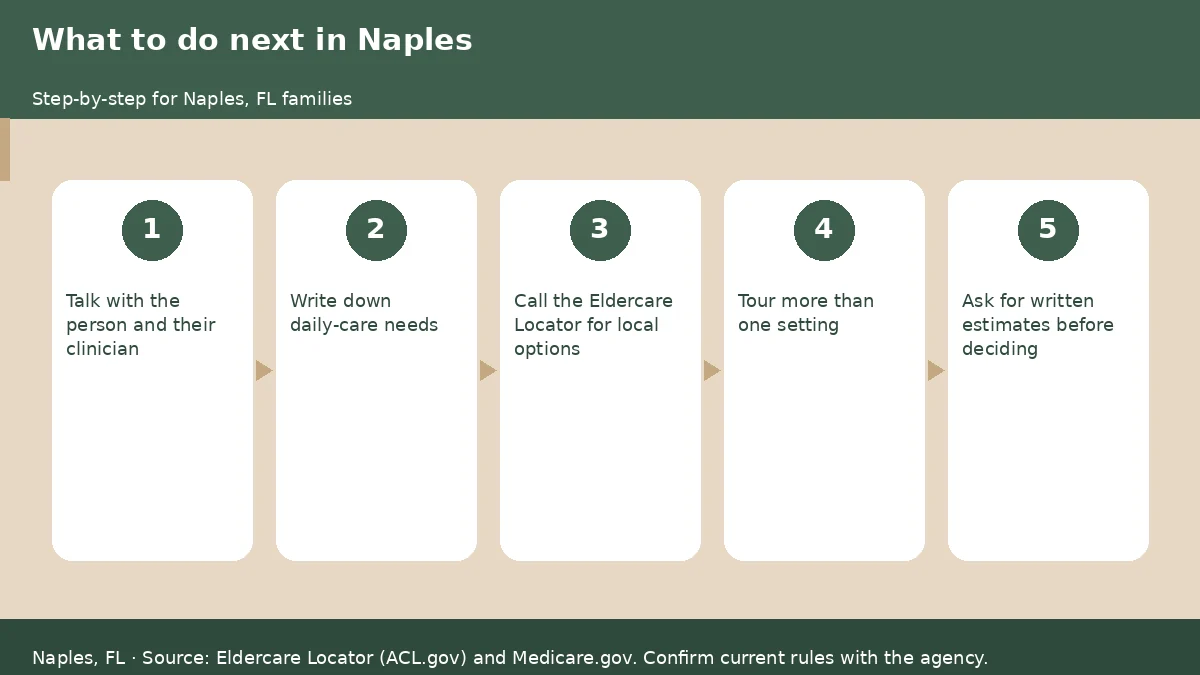
The Area Agency on Aging for Southwest Florida's Elder Helpline, 866-413-5337, connects older adults and families with local services (Area Agency on Aging for SWFL, Elder Helpline).
Talk with Bear Country Living
Bear Country Living is a residential home at 360 37th Avenue NE in Naples offering assisted living and memory care support. If you are seeing some of these signs, call (239) 467-6054 to talk it through and confirm current availability.
Frequently asked questions
What are the signs a parent needs assisted living?
Falls, weight loss, declining personal care, medication mistakes, a neglected home, isolation, memory changes, and an exhausted caregiver are among the most common.
Why is heat a concern for older adults in Naples?
Older adults may be less aware of thirst and heat stress, and some medications raise the risk. A parent who turns off air conditioning or spends time outdoors in midday heat may be at risk.
How can I tell if my parent is struggling if I live far away?
Look closely during visits, check the refrigerator, mail, and medications, and ask trusted local friends or neighbors to share what they notice.
Where can Naples families get help?
The Area Agency on Aging for Southwest Florida's Elder Helpline at 866-413-5337.